College updates
Admissions are open for the new Foundation Stage cohort The Scholars' Forum launches its weekly academic discussions A chained samāʿ session of Ṣaḥīḥ al-Bukhārī begins early next month The first issue of the College's peer-reviewed journal is released More than thirty new sources added to the Digital Library The Student Forum is now available inside the Student Portal

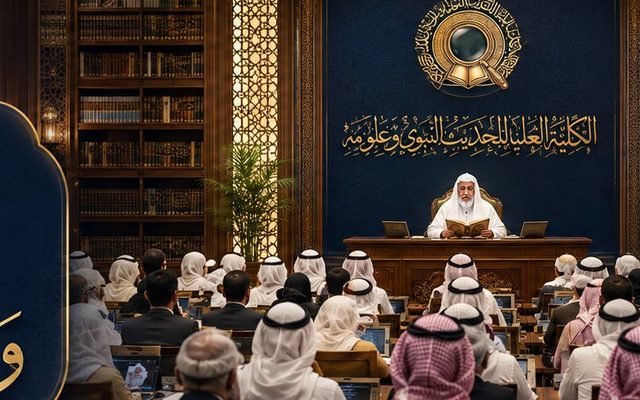
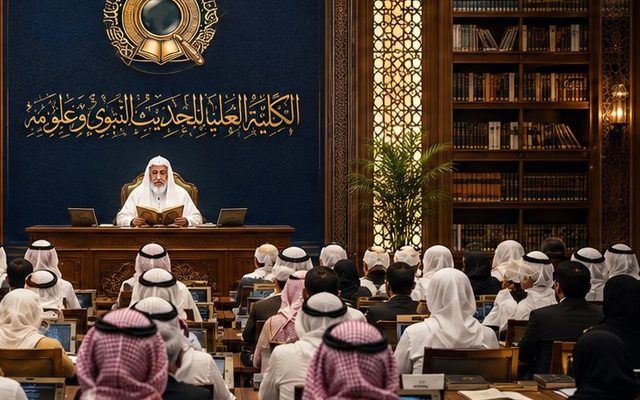
The Higher College of Prophetic Hadith, Sciences, and Studies

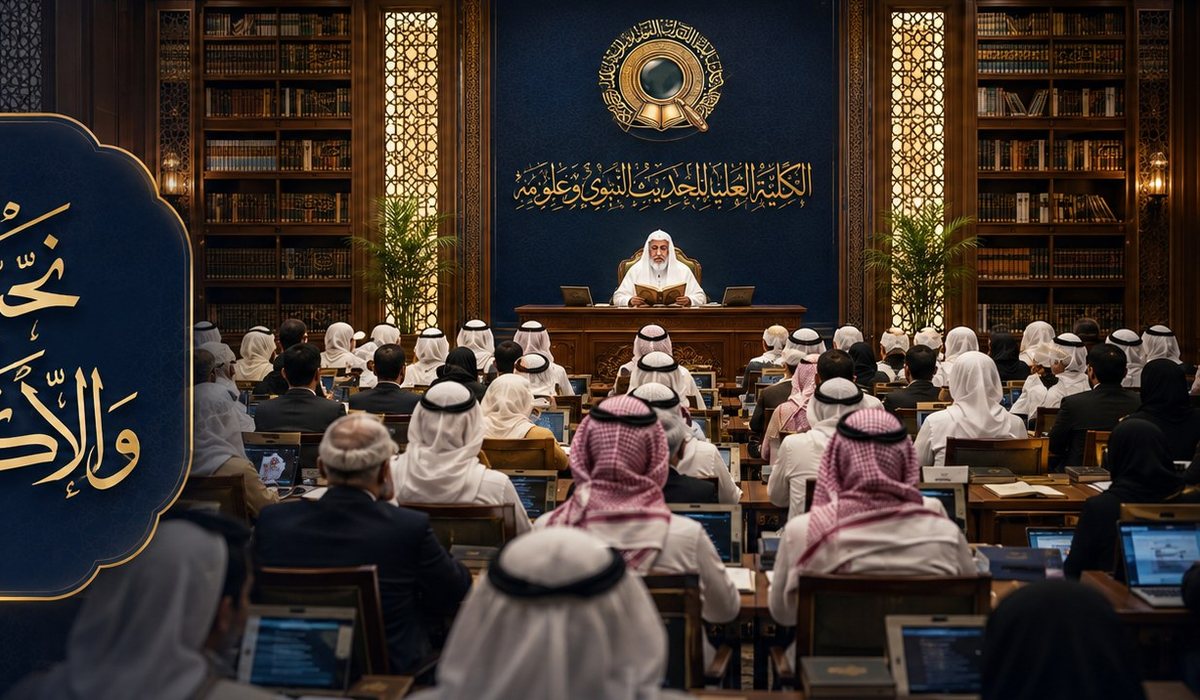
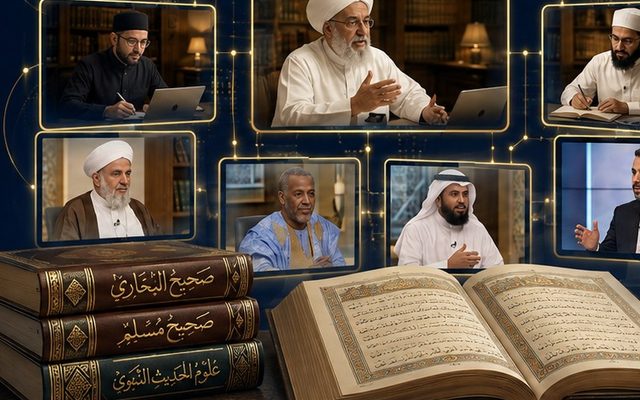
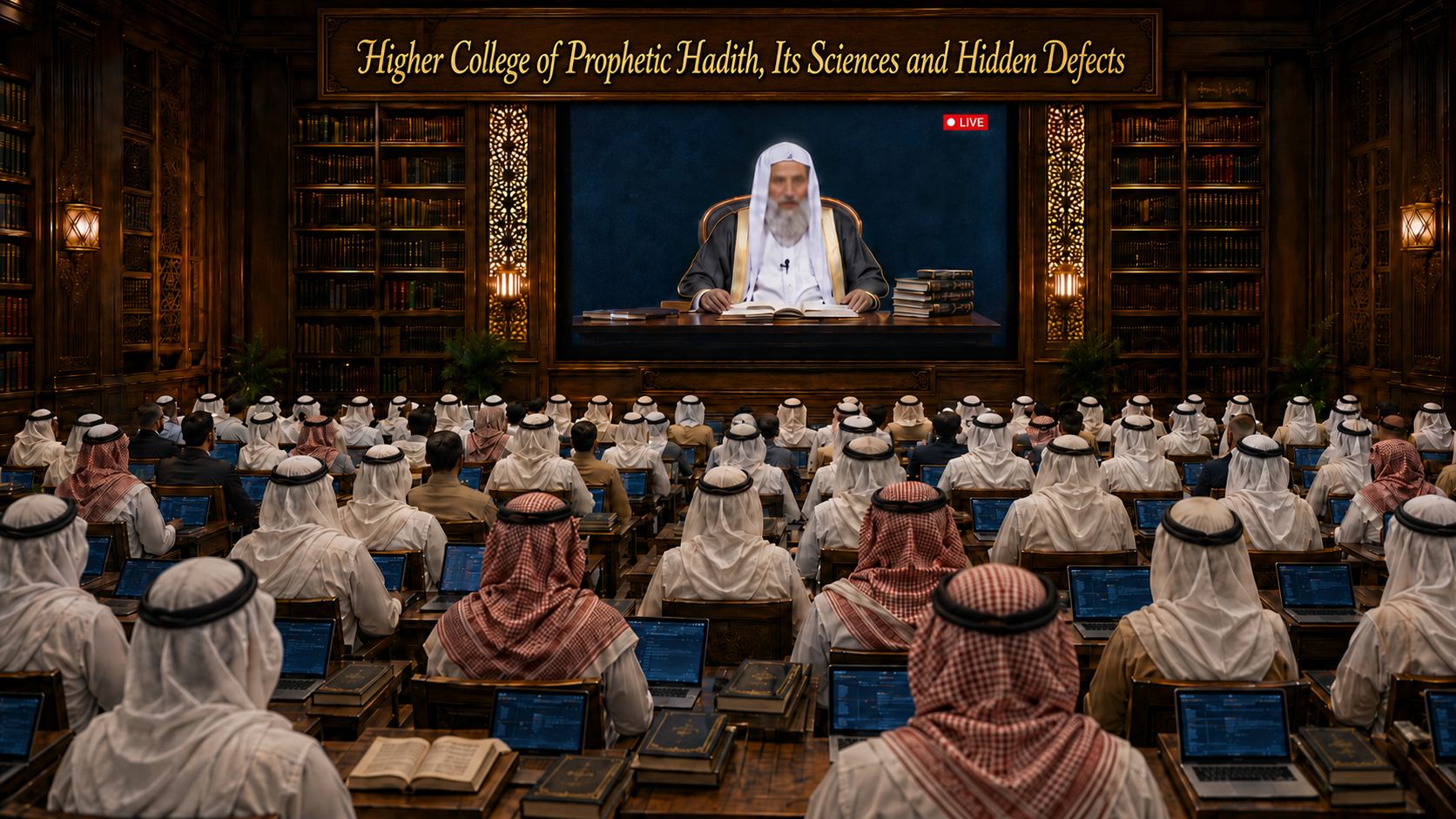
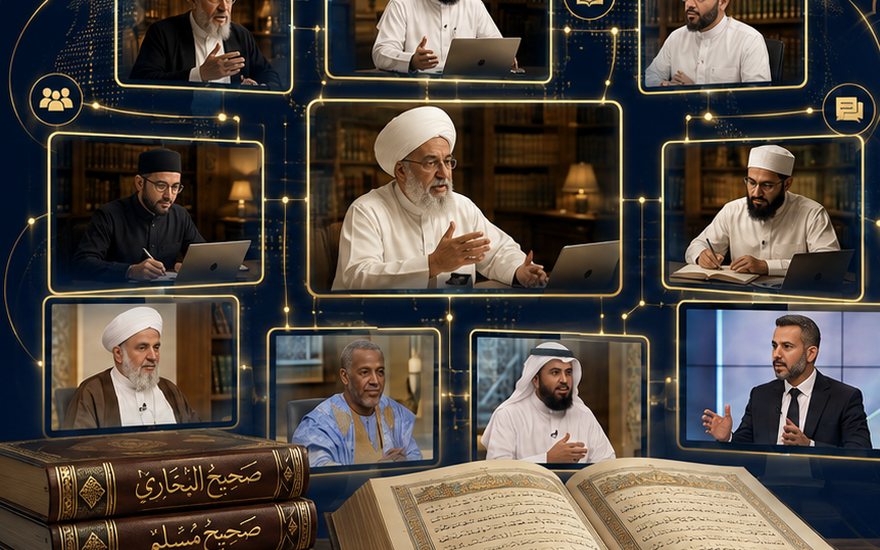
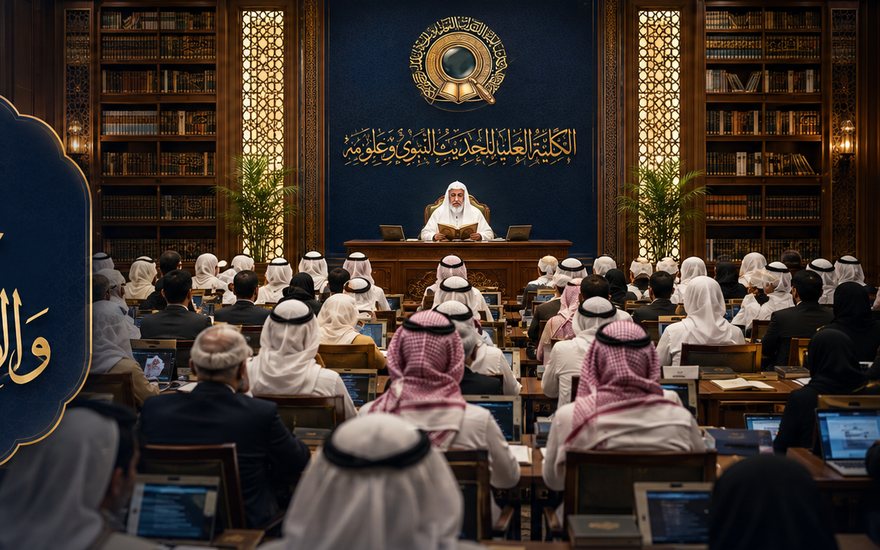
A live lecture hall where students follow a senior scholar on screen
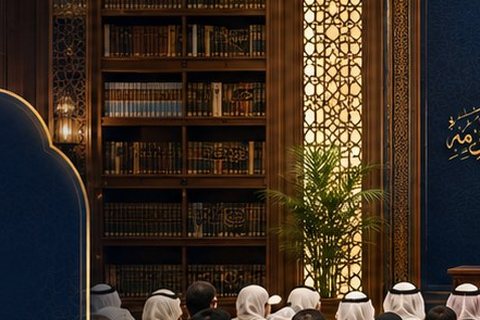
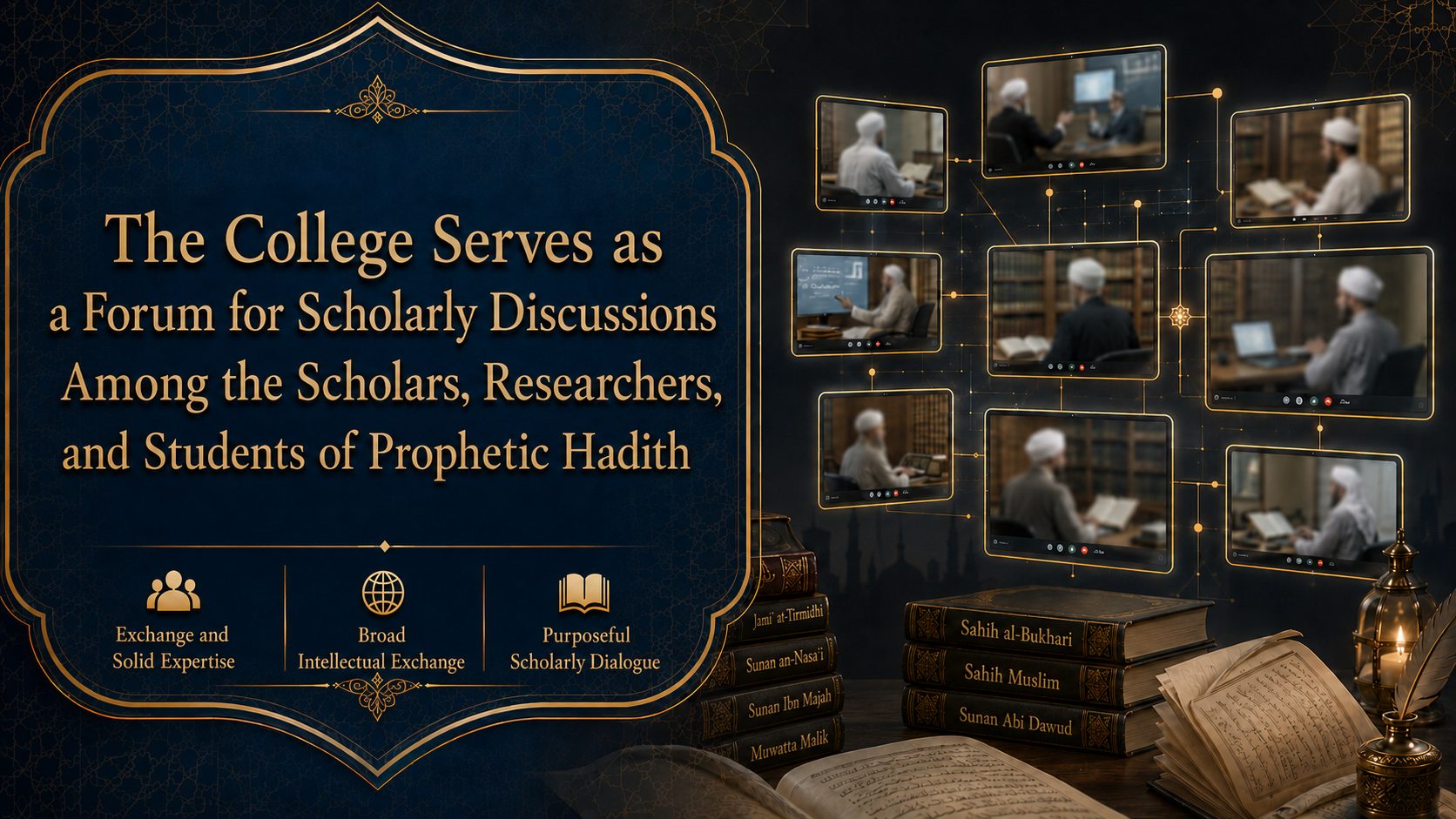
The college's scholarly discussion councils among hadith scholars, researchers and students
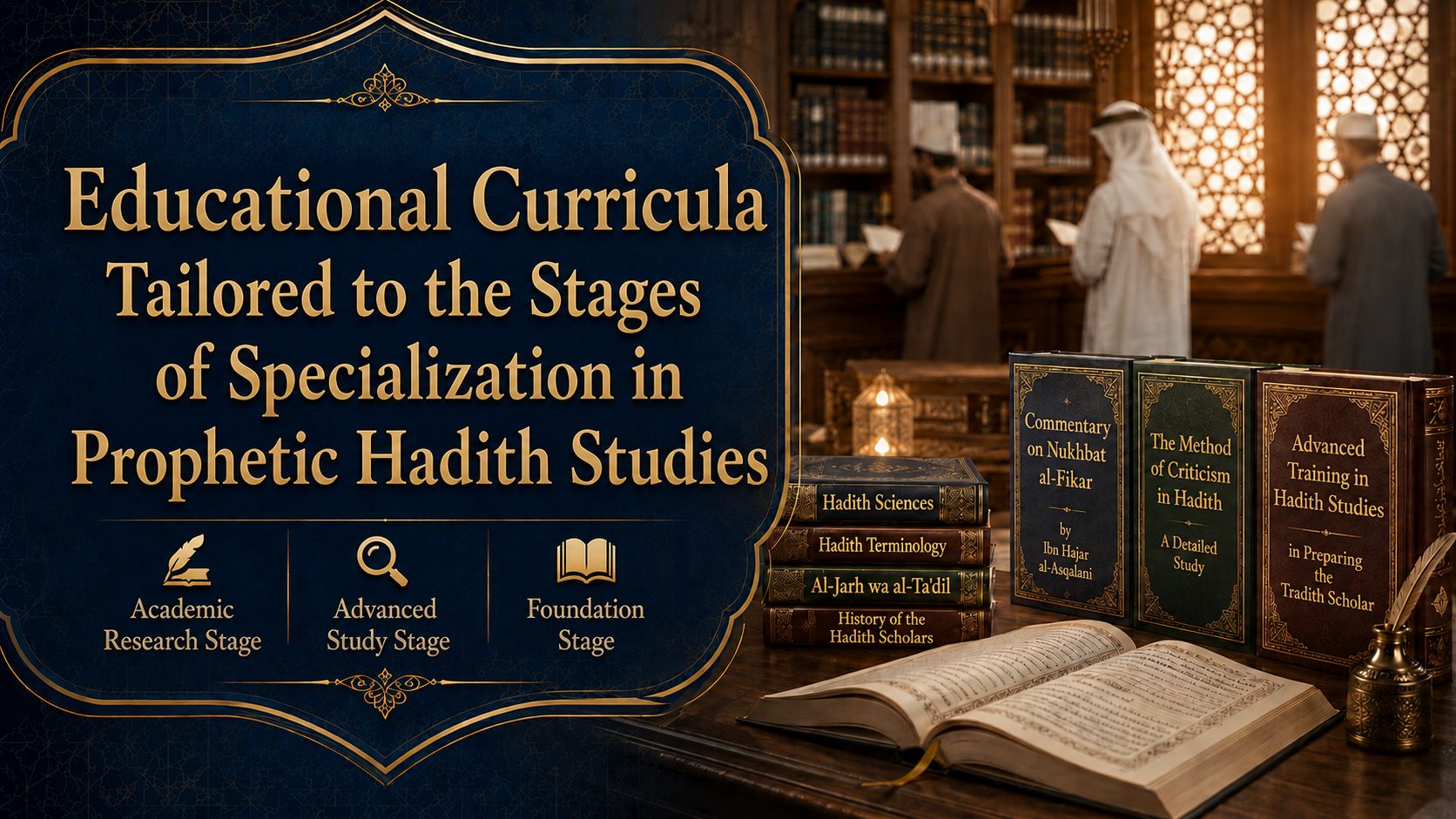
A curriculum aligned with the stages of specialization in the Prophetic Hadith sciences
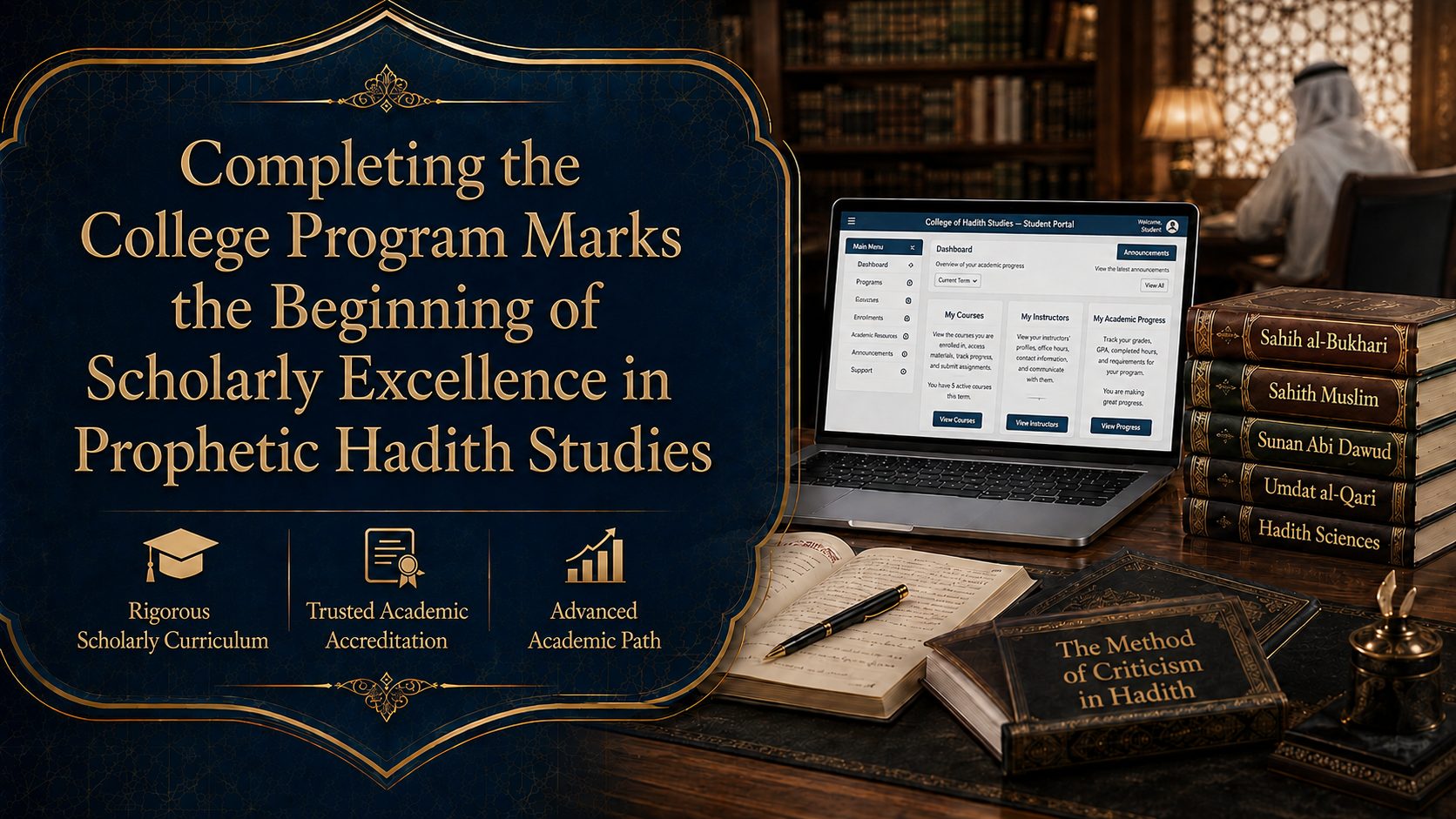
Completing the College program marks the beginning of the ʿālamiyyah in hadith sciences

Global leadership and scholarly authority in the service of Prophetic Hadith, its sciences and its hidden defects

  • 0progressive
    specialization stages
  • 0accredited courses
    in the plan
  • 0members of the
    academic faculty
  • 0scholarly councils
    in the Forum
  • 0countries represented
    by the faculty
  • Registration is open for this year's cohort Apply now

The college's pillars

A consultative and arbitration body
of high scholarly credibility

The college is a consultative and arbitration body of high scholarly credibility in Prophetic Hadith, its sciences and its hidden defects.

The advisory board
First pillar

The Forum of scholarly discussion

Councils of dialogue and study among hadith scholars, their researchers and students, following the way of the hadith masters in question, answer and defining the point of dispute. Twelve active councils on chains, defects, terminology and manuscripts, run under the supervision of the Scientific Council.

Enter the Forum
Second pillar

An elite of senior scholars

Seventeen members among senior scholars and academics from nine countries, supervising the courses, examining projects and granting ijāzahs.

The academic faculty
Third pillar

Curricula by stage of specialization

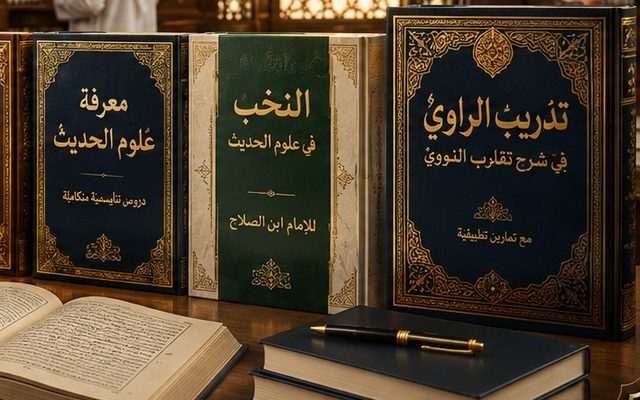
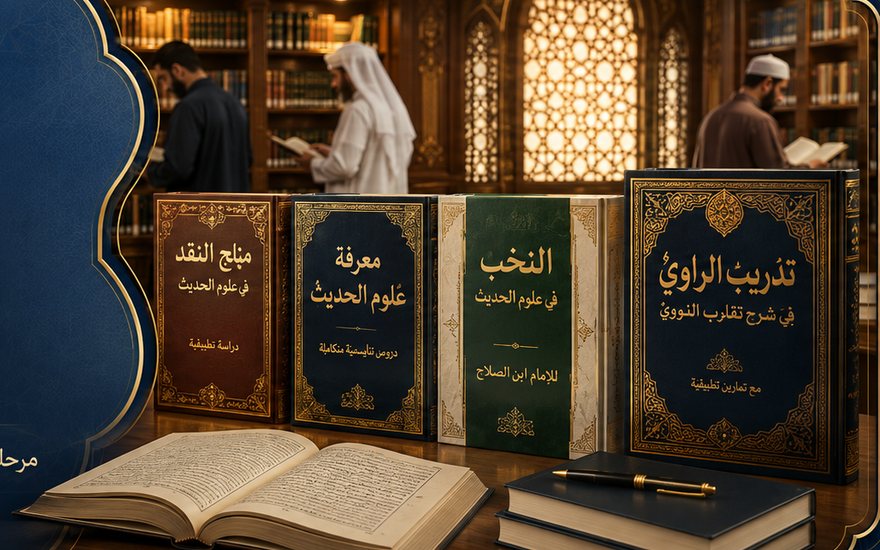
Twenty-four accredited courses across three stages, from Ibn al-Ṣalāḥ's Muqaddimah to Tadrīb al-Rāwī and the books of hidden defects.

The study plan

The academic faculty

An elite of senior scholars

The academic faculty: an elite of accomplished scholars and researchers who combine the legacy of the great hadith masters with the tools of modern research.

All members
  • Head of the Scientific Council Prof. Dr. Abd al-Jabbar ibn Hadi al-Naqib al-Marrani Hadith defects & text criticism
  • Professor of chains Dr. Muhammad ibn Salih al-Umari Chain analysis & hadith documentation
  • Associate professor Dr. Ahmad ibn Abdullah al-Shihri Applied hadith terminology
  • Professor of manuscript studies Dr. al-Husayn Wuld Baba al-Shinqiti Manuscript editing & collation
  • Faculty member Dr. Bashir ibn Ibrahim al-Nijiri Hadith comprehension & meanings of wording
  • Faculty member Dr. Umar ibn Yahya al-Humaydi Narrator biographies & generations

Discussion councils

The Forum of Scholars and Researchers

A scholarly forum for academic discussion among hadith scholars, their researchers and students — study of chains, defects, terminology and manuscripts, upheld by the etiquette of the hadith folk.

All discussions do not necessarily represent the college's view or orientation; they express the opinions of their authors.

Latest councils
    Content is protected under the college's intellectual and scholarly rights — viewing is allowed, copying is not. Browse all councils

    The academic track

    Qualifying students to become accomplished scholars
    and researchers in Prophetic Hadith, its sciences and its hidden defects

    Leadership in training male and female students in applied hadith research — twenty-four accredited courses, an original scholarly project, and a certified ijāzah documented with a number and record.

    Download the study plan
    1. Stage one One academic year · 8 courses

      Foundation Stage

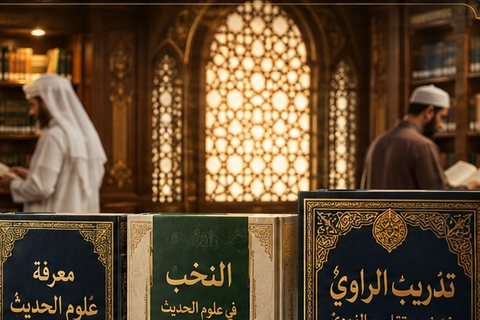
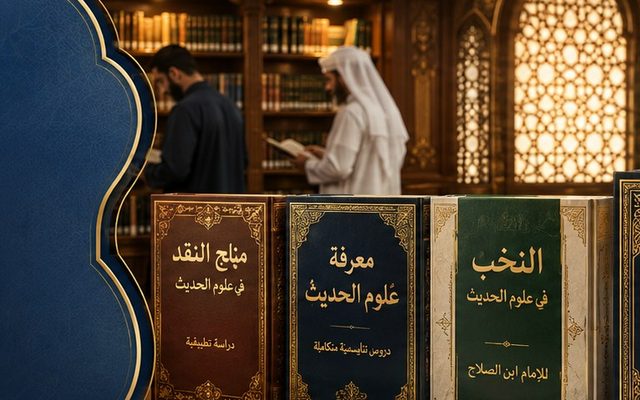
      Mastering terminology and the principles of narration, reading Ibn al-Ṣalāḥ's Muqaddimah and applied hadith terminology, with weekly training in reading chains.

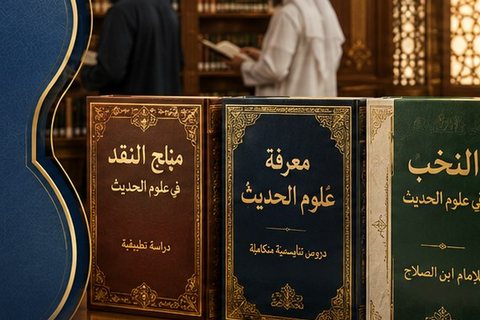
      • Muqaddimat Ibn al-Ṣalāḥ
      • Nukhbat al-Fikar
      • Applied hadith terminology
      Stage courses
    2. Stage two One academic year · 10 courses

      Advanced Stage

      Tahdhīb al-Kamāl, comparing narrations and studying chains and defects, with applications on the two Ṣaḥīḥs and the books of defects and biographies under direct supervision.

      • Tahdhīb al-Kamāl
      • Maʿrifat ʿUlūm al-Ḥadīth
      • Methods of criticism
      Stage courses
    3. Stage three One academic year · project + defense

      Research Stage

      An original scholarly project supervised by a faculty member, concluding with a public defense and a certified ijāzah that opens the ʿālamiyyah.

      • Tadrīb al-Rāwī
      • Research methods
      • The project & defense
      Project details

    Extending the mission

    Digitization & partnerships

    Two institutional goals that carry the college's impact beyond its halls: technology in the service of Prophetic Hadith, and bridges linking the college to scholarly institutions.

    Hadith digitization

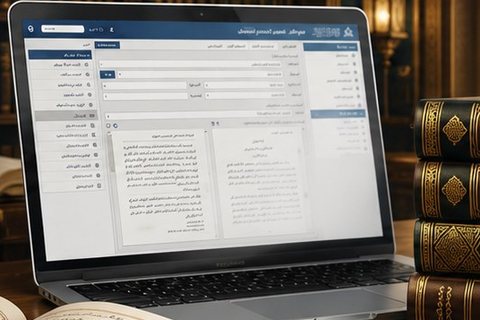
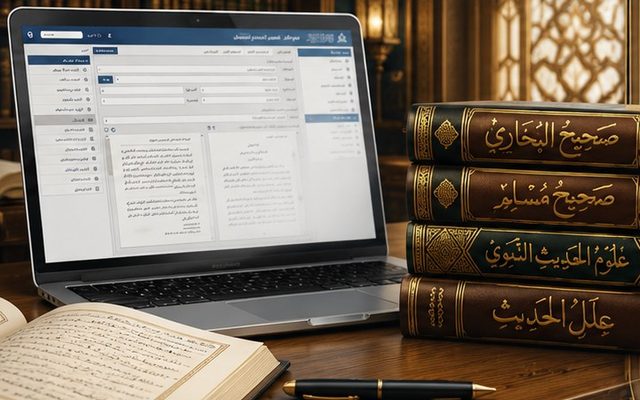
    Contributing to the development and evaluation of beneficial technical ideas and works in the service of Prophetic Hadith, its sciences, its jurisprudence and its hidden defects.

    Hadith research sites & apps

    Building partnerships & bridges

    With academic bodies and scholarly institutions — twinning, exchange of expertise, and joint research and scholarly projects.

    Partner with the college

    Admissions & registration

    Four steps to your seat

    Fees are optional and not a condition for admission; every student has what suits their means — full payment, reduced fees, or free.

    1. 1
      Complete the applicationBasic details, your academic qualification, and what you have previously studied in the hadith sciences.
    2. 2
      Placement testA short test in terminology and the principles of narration that sets your starting point in the plan.
    3. 3
      Academic interviewA brief meeting with a faculty member to assess readiness and the most suitable track.
    4. 4
      Admission & account setupAdmission notice, activation of the student portal, and access to the Student Forum and Forum councils.

    Frequently asked questions

    Is study remote or on campus?

    Study is fully remote through the college's platform, with weekly live councils that are recorded and made available afterwards. Chained samāʿ sessions are held both in person and by stream.

    What certificate do I receive?

    A certified scholarly ijāzah documented with a number and a verification code, issued by the college with the approval of the Scientific Council. Completing the program marks the beginning of the ʿālamiyyah in the hadith sciences.

    Do I need a university degree to enroll?

    No degree is required. The criterion is passing the placement test and the academic interview; the Foundation Stage is open to those without prior qualifications.

    How long is the program?

    About three academic years: one year for foundation, one for the advanced stage, and one for research and defense. An advanced student may shorten the Foundation Stage through the placement test.

    How do I take part in the Scholars' Forum?

    Viewing is open to everyone; writing is limited to faculty members, the college's researchers and its registered students, according to the discussion rules approved by the Scientific Council.

    Can I study alongside my job?

    Yes. The study load is designed for eight to ten hours per week, live councils are recorded, and assignments have flexible submission windows.

    Join the next cohort

    Begin your journey in the service of the Sunnah and heritage

    Admissions for this year's cohort close on the first of September. Seats are limited to ensure the quality of academic supervision.